Passa al contenuto
guilcor.com
  • Home
  • Prove
    Sonda a tubo liscio

    Tubo Liscio

    Frigorifero, pompa di calore, forno, congelatore, scaldabagno
    Sonda di contatto

    Contatto

    Tubo, superficie del tubo, piastra riscaldante
    Sonda a fessura

    Fessura

    Motore, alternatore, avvolgimento, statore
    Sonda di connessione testa

    Testa di connessione

    Caldaia, pompa di calore, aria condizionata, locali tecnici, ventilazione
    Sonda impermeabile

    Impermeabile

    Aria condizionata, ventilazione, refrigerazione, stoccaggio a freddo, condotti
    Sonda da infilare

    Infilare

    Forno, cottura, attrezzature per la lavorazione degli alimenti
    Sonda di avvolgimento

    Avvolgimento

    Motore, alternatore, trasformatore, avvolgimento, statore
    Sonda ambientale

    Ambientale

    Caldaia, pompa di calore, aria condizionata, locali tecnici, ventilazione
    Sonda a filettatura

    Filettatura

    Macchina da caffè, caldaia, vapore, fluido pressurizzato
    Sonda giacketata

    Giacketata

    Installazioni industriali, applicazioni pesanti
    Sonda a baionetta

    Baionetta

    Stampaggio plastico, attrezzature, macchina per stampaggio ad iniezione, motore, alternatore
    Progettazione PCBA

    progettazione PCBA

    Applicazione specifica, elettronica integrata, schede elettroniche personalizzate
  • Sensori

    RTD

    Pt10, Pt50, Pt100, Pt200, Pt500, Pt1000, Pt5000, Ni100, Ni120, Cu10, Cu50, Balco

    PTC

    KTY81-110, KTY81-210, KTY83-110, KTY84-130, PTC130, Silistor, TFPT, MZ6, MZ8, MZ9

    1-Wire

    DS18B20, DS18S20, DS1822, DS28EA00, DS18B20-PAR, DS1920, DS2438, DS1835...

    Termocoppia

    B, E, J, K, N, R, S, T, C, D, G

    UART

    MLX90614, MLX90615, GY-906, DHT11, DHT22, SHT75, SHT85, RS232, RS485

    SPI

    MAX6675, MAX31855, MAX31856, MCP3208, TMP125, TMP121, ADT7310, LTC2983...

    NTC

    1kΩ, 2kΩ, 3kΩ, 5kΩ, 10kΩ, 15kΩ, 20kΩ, 30kΩ, 50kΩ, 100kΩ, 200kΩ, 470kΩ, 1MΩ

    I²C

    TMP102, TMP117, LM75, LM73, MCP9808, MCP9600, SHT31, SHTC3, BME280, BME688, HTU21D, HDC1080, Si7051, ADT7410, STTS751, TCN75A...
  • Chi siamo
  • 0
  • 0
  • Seguici
  • English (US) Français Italiano Español
  • Accedi
  • Contattaci
guilcor.com
  • 0
  • 0
    • Home
    • Prove
    • Sensori
    • Chi siamo
  • Seguici
  • English (US) Français Italiano Español
  • Accedi
  • Contattaci

 LM73 
 Temperature sensors 

Compact digital temperature sensor with fast response time, designed for embedded and low-power applications.

 Maximum precision
+/- 1,0°K

 Measurement range
-40 / 15°C

 Resolution
11 à 14 bits

 Power supply voltage
2,65 → 3,6V

Conversion speed

20 to 120mS

I2C adress
0 x 48

 Typical current
300µA(active)

 Price
Medium

What is a LM73 sensor ?Operating principleTemperature curve / numerical value (12-bit resolution)Principle diagram (I2C connection)Application areas

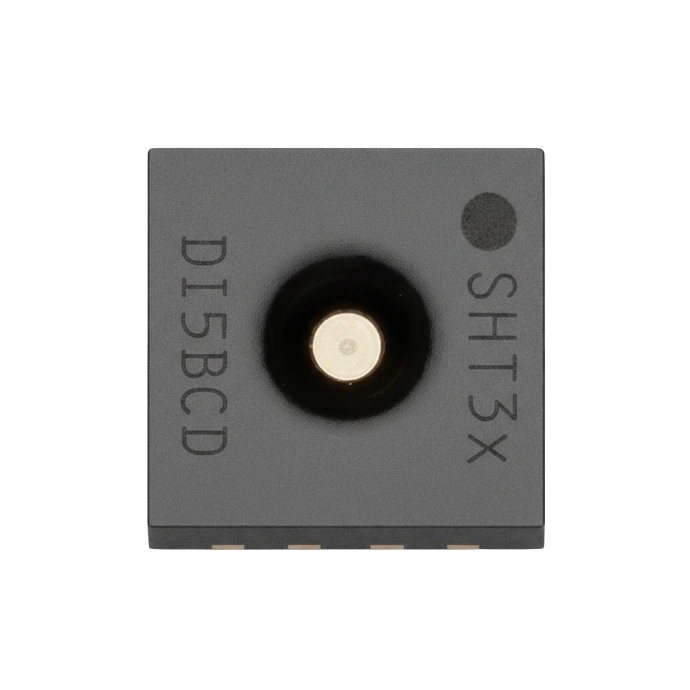
What is a LM73 sensor ?


The LM73 is a digital temperature sensor with I²C/SMBus output, developed by Texas Instruments (formerly National Semiconductor).

It succeeds the LM75 by providing:

  • a resolution of up to 14 bits (compared to 9 bits for the LM75),
  • better accuracy,
  • an adjustable conversion time,
  • and an advanced configuration register.

It is an excellent compromise between simplicity and performance, ideal for demanding embedded applications without going up to metrological precision models (like the TMP117).

Operating principle


The LM73 uses an integrated thermal sensor coupled with a 14-bit ΔΣ (Delta-Sigma) converter.

The measurement is stored in an internal register and transmitted via the I²C bus.

Each bit corresponds to 0.03125 °C in 14-bit mode.

​T(°C) = Binare code x 0,03125

💡 Selectable resolution: 11, 12, 13, or 14 bits depending on needs (accuracy vs speed).

Temperature curve / numerical value (12-bit resolution)


Temperature (°C)
Numerical value (hex)

Binary output (12bits)

-40

0xF600

1111 0110 0000 0000

0 0x0000

0000 0000 0000 0000

25

0x0800

0000 1000 0000 0000

85 0x1500

0001 0101 0000 0000

125

0x1F00

0001 1111 0000 0000

🧮 1 LSB = 0.03125 °C → 32 values per degree Celsius.

Principle diagram (I2C connection)


+3.3V │ [LM73] │ SDA ─────────┐ │ SCL ─────────┤── [I²C Microcontroller] │ ALERT/OS ────┘ │ GND

💡 The LM73 can coexist with other I²C sensors thanks to its two address pins (A0–A1).

Application areas


🧠 Embedded cards and IoT

⚙️ Industrial temperature monitoring

🧪 Laboratory electronics and data loggers

🔋 Thermal management of batteries / power supplies


Should I choose a LM73 sensor ?

Strengths points

  • 🎯 Better resolution than the LM75
    → With its 14 bits, it detects variations of 0.03 °C, compared to 0.5 °C for the LM75.
  • 🧠 Flexible configuration
    → Adjustable speed and resolution: perfect for balancing precision and responsiveness according to the application.
  • 📡 Total SMBus compatibility
    →Works equally well with a microcontroller, a motherboard controller, or an industrial PC.
LM73 sensors

Weaknesses points

  • 🌡️ Moderate accuracy compared to TMP117
    → Even with more bits, the accuracy remains limited to ±1 K typical.
  • ⚙️ No built-in calibration
    → The errors due to assembly or thermal radiation must be compensated for by software.
  • 💸 Price slightly higher than the LM75
    → But justified by its increased resolution and flexibility.

Useful information

Here is some useful information regarding the LM73 sensors.

Adress Registry Name
Function
0x00 Temperature Register Measurement result (14 signed bits)
0x01 Configuration Register Definition of mode, resolution, and conversion
0x04 T_Hyst Register Low threshold for alert
0x05 T_Limit Register High threshold for alert
0x07 ID Register Component ID and revision

i2c_start(); i2c_write(0x48 << 1); // Address LM73 (writing) i2c_write(0x00); // Temperature log i2c_start(); i2c_write((0x48 << 1) | 1); MSB = i2c_read_ack(); LSB = i2c_read_nack(); i2c_stop(); raw = (MSB << 8) | LSB; temp = (raw >> 2) * 0.03125; // 14-bit conversion (2 useless bits)

✅ Example:

MSB = 0x08, LSB = 0x00

→ (0x0800 >> 2) × 0.03125 = 32 × 0.03125 = 25.0 °C

+3.3V ───────────┐ │ [LM73] │ SDA ───────┐ │ SCL ───────┤── MCU I²C (Arduino, STM32, ESP32…) │ ALERT ─────┘ │ GND

💡 Pull-up resistors (4.7 kΩ typical) are required on SDA and SCL.

Bit Name
Description
[7:6] Resolution 00=11 bits, 01=12 bits, 10=13 bits, 11=14 bits
[5:3] Conversion Rate 000=1 Hz / 111=32 Hz
[2] One-shot Unique conversion
[1:0] Mode 00=Normal / 01=Shutdown / 10=Comparator / 11=Interrupt
Temperature (°C) Max error (K)
−40 ±1,5
0 ±1,0
50 ±0,8
100 ±1,0
125 ±1,5
💡 The LM73 offers an excellent balance between precision, responsiveness, and simplicity — a solid choice for embedded applications.

 We integrate any sensor into any probe 

Smooth tube probe

 Smooth tube 

Waterproof probe

 Waterproof

Bayonet probe

 Bayonet

Slot probe

 Slot

Ambient probe

 Atmosphere

Head connection probe

Termal block

Stick-in probe

Stick-in

Thread probe

Thread

Contact probe

Contact

Jacketed probe

Jacketed

PCBA Design

PCBA design

Winding probe

Winding

More than 1,000,000 probes delivered in 2025

Contact us for a personalized offer

Contact Us

Need a LM73 sensor?

Whether you need a few parts for a prototype or several hundred for a production line, we support you at every step.

Submit
Collegamenti utili
  • Casa
  • Chi Siamo
  • Lavori
  • Note Legali
  • Informativa sulla Privacy
  • Contattaci
Chi siamo

Presso Guilcor, la nostra missione è fornire a ogni cliente una soluzione di misurazione perfettamente adatta alle proprie esigenze specifiche. Con il pieno controllo sul design e sulla produzione, garantiamo la precisione e l'affidabilità dei nostri sensori anche negli ambienti più esigenti.

L'eccellenza tecnica e la soddisfazione del cliente sono al centro di tutto ciò che facciamo.

Entra in contatto con noi
  • Contattaci
  • contact@guilcor.com
Seguici

Politica sui cookie

Usiamo cookie per garantirti la migliore esperienza utente sul nostro sito web. Informativa sui cookie

Solo essenziali Accetto