Se rendre au contenu
GUILCOR SENSORS
  • Accueil
  • Probes

    Smooth Tube

    Refrigerator, heat pump, oven, freezer, water heater

    Contact

    Pipe, pipe surface, heating plate

    Slot

    Motor, alternator, winding, stator

    Connection head

    Boiler, heat pump, air conditioning, technical rooms, ventilation

    Waterproof

    Air conditioning, ventilation, refrigeration, cold storage, ductwork

    Stick-in

    Oven, cooking, food processing equipment

    Winding

    Motor, alternator, transformer, winding, stator

    Ambient

    Boiler, heat pump, air conditioning, technical rooms, ventilation

    Thread

    Coffee machine, boiler, steam, pressurized fluid

    Jacketed

    Industrial installations, heavy-duty applications

    Bayonet

    Plastic molding, tooling, injection molding machine, engine, alternator

    PCBA design

    Specific application, embedded electronics, custom electronic boards
  • Sensors

    RTD

    Pt10, Pt50, Pt100, Pt200, Pt500, Pt1000, Pt5000, Ni100, Ni120, Cu10, Cu50, Balco

    PTC

    KTY81-110, KTY81-210, KTY83-110, KTY84-130, PTC130, Silistor, TFPT, MZ6, MZ8, MZ9

    1-Wire

    DS18B20, DS18S20, DS1822, DS28EA00, DS18B20-PAR, DS1920, DS2438, DS1835...

    Thermocouple

    B, E, J, K, N, R, S, T, C, D, G

    UART

    MLX90614, MLX90615, GY-906, DHT11, DHT22, AM2302, SHT75, SHT85, RS232, RS485

    SPI

    MAX6675, MAX31855, MAX31856, MCP3208, TMP125, TMP121, ADT7310, LTC2983...

    NTC

    1kΩ, 2kΩ, 3kΩ, 5kΩ, 10kΩ, 15kΩ, 20kΩ, 30kΩ, 50kΩ, 100kΩ, 200kΩ, 470kΩ, 1MΩ

    I²C

    TMP102, TMP117, LM75, LM73, MCP9808, MCP9600, SHT31, SHTC3, SHT85, BME280, BME688, HTU21D, HDC1080, Si7051, ADT7410, STTS751, TCN75A...
  • About us
  • 0
  • Shqip አምሃርኛ الْعَرَبيّة Azərbaycanca বাংলা bosanski jezik български език ဗမာစာ hrvatski jezik Čeština Dansk Nederlands (BE) Nederlands English (AU) English (CA) English (IN) English (NZ) English (UK) English (US) Eesti keel Suomi Français (BE) Français (CA) Français (CH) Français Galego ქართული ენა Deutsch (CH) Deutsch Ελληνικά ગુજરાતી עברית हिंदी Magyar Bahasa Indonesia Italiano 日本語 Taqbaylit ភាសាខ្មែរ 한국어 (KR) ພາສາລາວ latviešu valoda Lietuvių kalba Luxembourgish македонски јазик Bahasa Melayu മലയാളം монгол Norsk bokmål فارسی Język polski Português (AO) Português (BR) Português română српски srpski Español (CL) Español (CO) Español (CR) Español (DO) Español (EC) Español (MX) Español (UY) Español Kiswahili Filipino ภาษาไทย
  • Se connecter
  • Contactez-nous
GUILCOR SENSORS
  • 0
    • Accueil
    • Probes
    • Sensors
    • About us
  • Shqip አምሃርኛ الْعَرَبيّة Azərbaycanca বাংলা bosanski jezik български език ဗမာစာ hrvatski jezik Čeština Dansk Nederlands (BE) Nederlands English (AU) English (CA) English (IN) English (NZ) English (UK) English (US) Eesti keel Suomi Français (BE) Français (CA) Français (CH) Français Galego ქართული ენა Deutsch (CH) Deutsch Ελληνικά ગુજરાતી עברית हिंदी Magyar Bahasa Indonesia Italiano 日本語 Taqbaylit ភាសាខ្មែរ 한국어 (KR) ພາສາລາວ latviešu valoda Lietuvių kalba Luxembourgish македонски јазик Bahasa Melayu മലയാളം монгол Norsk bokmål فارسی Język polski Português (AO) Português (BR) Português română српски srpski Español (CL) Español (CO) Español (CR) Español (DO) Español (EC) Español (MX) Español (UY) Español Kiswahili Filipino ภาษาไทย
  • Se connecter
  • Contactez-nous

 SPI 
 temperature sensors 
Contact US

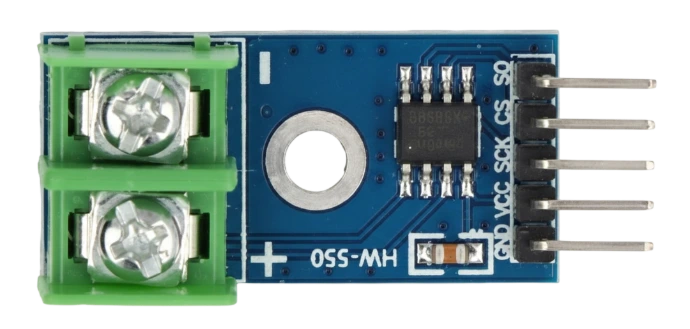
Ultra-fast and stable digital sensors, designed for industrial applications requiring reliable high-speed transmission via the SPI bus.

What is an SPI sensor ?

An SPI (Serial Peripheral Interface) sensor is a digital sensor that uses the SPI communication protocol to transmit data to a microcontroller or PLC. This protocol, widely used in industry and embedded electronics, relies on synchronous full-duplex communication: data flows simultaneously in both directions, offering high transfer speeds and great reliability.

SPI temperature sensors are used in environments where precision, responsiveness, and stability are essential. They generally consist of an integrated measurement probe and a digital processing circuit that converts data directly into a format usable by a PLC, microcontroller, or embedded system.

MAX6675 MAX31855 MAX31856 MCP3208 TMP125 TMP121 ADT7310 LTC2983

 We integrate any sensor into any probe 

 Smooth tube 

 Waterproof

 Bayonet

 Slot

 Atmosphere

Termal block

Stick-in

Thread

Contact

Jacketed

PCBA design

Winding

✽  What SPIs Offer

Discover the main four benefits

1

Ultra-fast communication

 The SPI protocol allows transmission speeds far superior to I²C or 1-Wire interfaces. This ensures near-instantaneous temperature readings, even in critical environments where reaction time is essential.

2

Simplicity of hardware integration

SPI generally uses 4 lines (MOSI, MISO, SCK, CS), which makes it easy to integrate into printed circuits or embedded systems. Many microcontrollers are already natively compatible with this interface.

3

High data reliability

Thanks to its synchronous communication, SPI offers excellent signal stability, even in noisy industrial environments. The risk of read errors is reduced, making it a reliable choice for sensitive applications.

4

A wide range of available sensors

Compact, multi-parameter, or ultra-precise models: the SPI sensor offering is vast and covers needs ranging from simple thermal regulation to complex environmental monitoring.

Do you have a project ? Let's talk about it.

Tell us about your application, constraints, and volumes. We design the SPI sensor you need.

Submit

Frequently asked questions

Here are some common questions about our SPIs.

An SPI sensor communicates with a microcontroller via the Serial Peripheral Interface protocol. This protocol uses dedicated communication lines (MISO, MOSI, SCK, CS) to transmit data quickly and reliably. The sensor sends a digital value directly, avoiding any analog conversion.

SPI offers higher transmission speed, better signal stability, and full-duplex communication. Unlike I²C, it has no strict limit on the number of devices, as long as each sensor has its dedicated chip select (CS) line. It is also less sensitive to electromagnetic interference than 1-Wire.

Integrating an SPI sensor requires an SPI-compatible microcontroller or PLC. You need to connect the MISO, MOSI, SCK, and CS pins. It's also important to correctly configure the clock frequency and SPI mode (0 to 3) according to the chosen sensor. Our datasheets detail the required connections and timing.

Yes. We develop custom SPI sensors according to your constraints: temperature range, usage environment, type of connector, acquisition frequency, or microcontroller compatibility. We support you from prototyping to mass production.

Liens utiles
  • Accueil
  • About Us
  • General terms and conditions of sale
  • Legal Notices
  • Privacy Policy
  • Contactez-nous
À propos de nous

At Guilcor, our mission is to provide every client with a measurement solution perfectly suited to their specific needs. With full control over design and manufacturing, we ensure the precision and reliability of our sensors in even the most demanding environments.

Technical excellence and customer satisfaction are at the heart of everything we do.

Rejoignez-nous
  • Contactez-nous
  • contact@guilcor.com
Suivez-nous
​
Copyright © GUILCOR SENSORS
Shqip አምሃርኛ الْعَرَبيّة Azərbaycanca বাংলা bosanski jezik български език ဗမာစာ hrvatski jezik Čeština Dansk Nederlands (BE) Nederlands English (AU) English (CA) English (IN) English (NZ) English (UK) English (US) Eesti keel Suomi Français (BE) Français (CA) Français (CH) Français Galego ქართული ენა Deutsch (CH) Deutsch Ελληνικά ગુજરાતી עברית हिंदी Magyar Bahasa Indonesia Italiano 日本語 Taqbaylit ភាសាខ្មែរ 한국어 (KR) ພາສາລາວ latviešu valoda Lietuvių kalba Luxembourgish македонски јазик Bahasa Melayu മലയാളം монгол Norsk bokmål فارسی Język polski Português (AO) Português (BR) Português română српски srpski Español (CL) Español (CO) Español (CR) Español (DO) Español (EC) Español (MX) Español (UY) Español Kiswahili Filipino ภาษาไทย
Généré par Odoo - Le #1 Open Source eCommerce