UART
temperature sensors
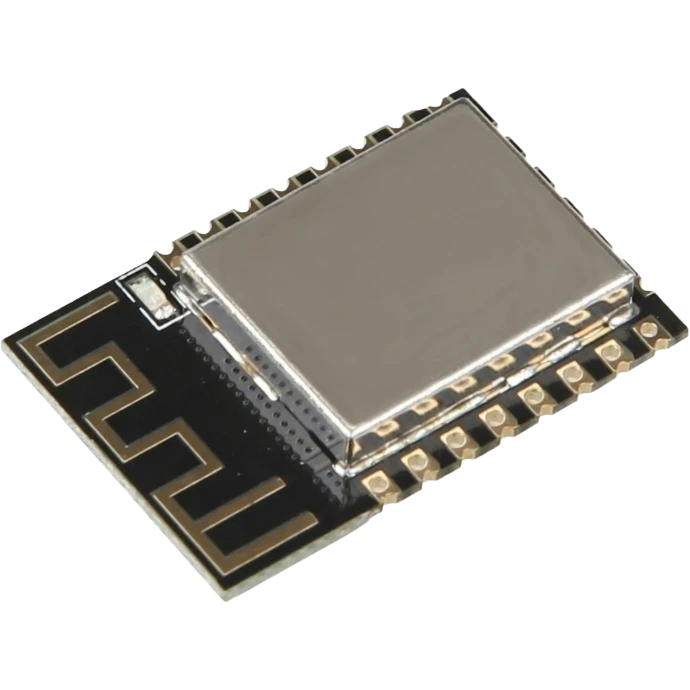
A simple, direct, and reliable serial interface for transmitting temperature data, ideal for embedded projects or light industrial environments.
What is a UART sensor ?
A UART (Universal Asynchronous Receiver Transmitter) sensor uses an asynchronous serial interface to transmit its data. Widely used in embedded electronics, this point-to-point communication is simple to implement: two wires are enough, one for transmission (TX) and one for reception (RX).
This type of sensor is available in contact versions (DHT11, DHT22) or non-contact infrared (MLX90614, GY-906), and some models also combine humidity measurement, offering a complete low-cost solution.
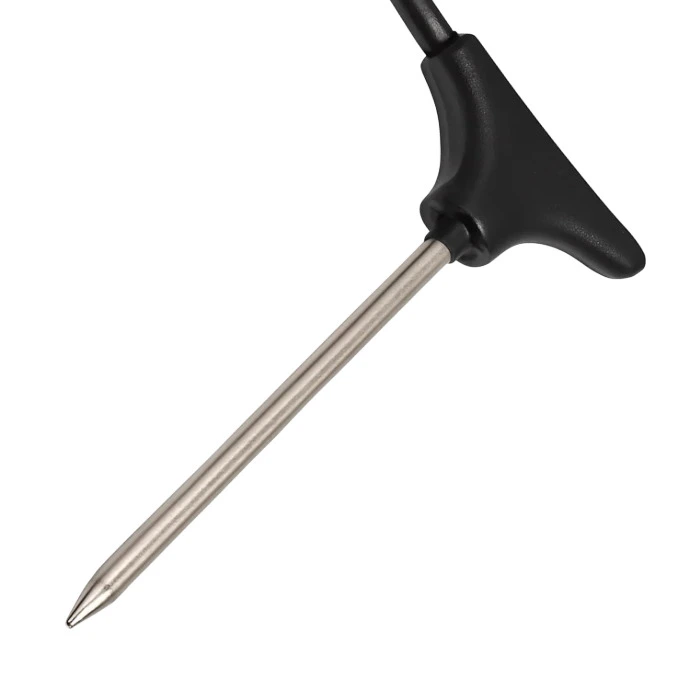
We integrate any sensor into any probe


Termal block


✽ What UARTs Offer
Discover the main four benefits
Simple and universal interface
UART sensors are easy to integrate. No complex configuration needed: two wires are enough to establish stable communication with any UART-compatible microcontroller or PLC.
Directly readable without external converter
Unlike some analog sensors, UART sensors provide direct digital data (often already calibrated), ready to be read and used by a system.
Cost-effective solution for large-scale
Projects Most UART sensors (like DHT11 or DHT22) are very affordable, making them an excellent choice for installations requiring numerous measurement points without exceeding the budget.
Suitable for long distances (RS232 / RS485)
Some UART sensors use RS232 or RS485 interfaces, enabling reliable data transmission over several tens or even hundreds of meters without signal loss.
Do you have a project ? Let's talk about it.
Need an UART sensor suited to your constraints ?
Whether for an embedded system, production line, or home automation project ? Tell us your requirements so we can support you effectively.
Frequently asked questions
Here are some common questions about our UARTs.
A UART sensor uses asynchronous serial communication to send its data, typically via two wires: TX (transmission) and RX (reception). It easily integrates with most microcontrollers, without the need for a shared clock or complex protocol.
UART is a basic communication protocol. RS232 and RS485 are physical standards based on UART :
- RS232 : for connecting a sensor over short distances, point-to-point. RS485 : for connecting multiple sensors on a single line, even over several hundred meters.
Connect the sensor's TX and RX pins to those of your microcontroller. Ensure the logic level is compatible (3.3V or 5V) and that the transmission parameters (baud rate, stop bits, parity, etc.) are correctly configured.
No. Some UART sensors (like the DHT22, SHT85, or BME688) also measure humidity, pressure, or even air quality. UART communication allows multiple values to be transmitted in a single data stream.
No, the standard UART interface works in point-to-point communication. If you need to manage multiple UART sensors, you will need to :
- either use multiple serial ports on your microcontroller,
- add a serial multiplexer to switch between sensors,
- or opt for a multi-slave protocol like RS485.