1-Wire
temperature sensors
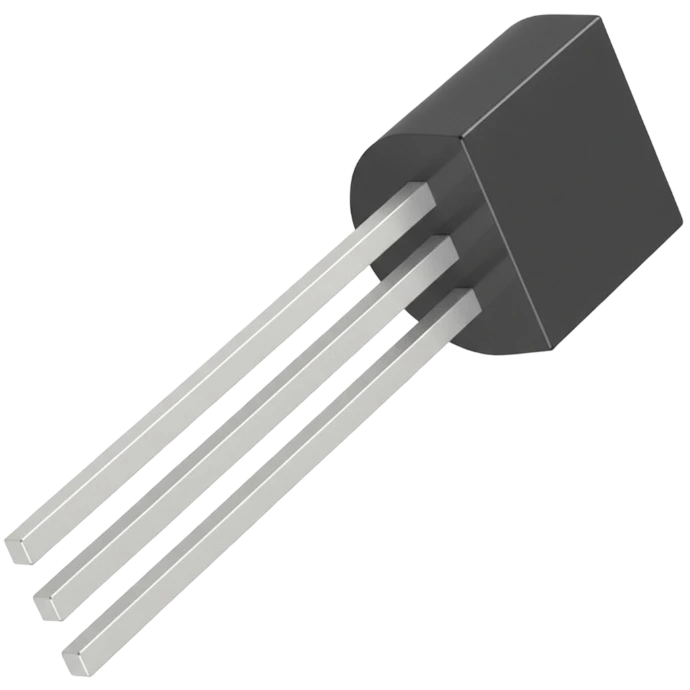
Precise and easy-to-integrate digital sensors, ideal for connected systems, home automation, and multipoint networks.
What is a 1-Wire sensor ?
A 1-Wire sensor is a digital temperature sensor that uses a single communication line to transmit data... and sometimes also for its power (parasitic mode). Initially developed by Maxim Integrated, the 1-Wire technology is known for its ease of integration, robustness, and multi-slave compatibility.
1-Wire sensors (like the famous DS18B20) offer an extended temperature range, good accuracy, and direct digital communication, avoiding any drift related to cables or analog interference.
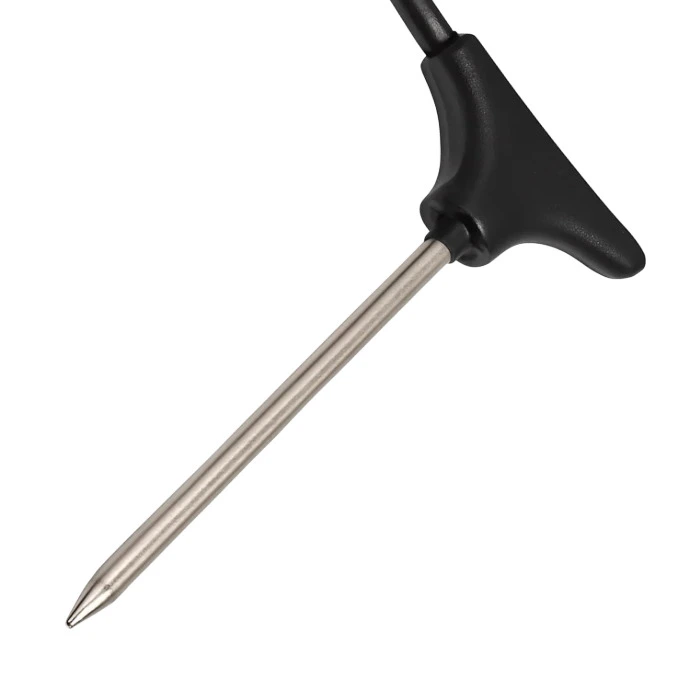
We integrate any sensor into any probe


Termal block


✽ What 1-Wire Offer
Discover the main four benefits
Simplified wiring and quick integration
A single wire is enough for communication, and sometimes even for power (parasitic mode). Ideal for projects with high wiring constraints or rapid deployment.
Reliable digital communication.
1-Wire sensors transmit data in digital form, without loss related to cable length or electromagnetic interference, unlike analog sensors.
Unique identification of each sensor
Each sensor has a factory-engraved identification number, allowing dozens of probes to be connected on a single line without risk of confusion or conflict.
Wide compatibility with microcontrollers.
Perfect for Raspberry Pi, Arduino, ESP32, and other industrial controllers, 1-Wire sensors easily integrate into all embedded or connected systems.
Do you have a project ? Let's talk about it.
Need an 1-Wire sensor suited to your constraints ?
Specify your usage, desired references, estimated quantity, and supply frequency. We assist you in developing 1-Wire digital probes ready to integrate into your systems.
Frequently asked questions
Here are some common questions about our 1-Wire probes.
The DS18B20 is a digital temperature sensor from the 1-Wire family, known for its accuracy, ease of integration, and versatility. It operates in a range from -55°C to +125°C with an accuracy of ±0.5°C between -10°C and +85°C.
Its resolution is configurable (from 9 to 12 bits), with a default resolution of 12 bits, or 0.0625°C per increment. Powered by 3 to 5.5 V, it consumes less than 1 mA in operation. It can also operate in parasitic mode, without dedicated power, making it very convenient for minimal installations.
Response time : < 750 ms.

One of the major advantages of the DS18B20 is its ability to operate in a multipoint network on a single data line. Each sensor has a unique 64-bit factory-engraved identifier, allowing dozens of probes to be connected on the same bus without duplication risk.
It is an ideal solution for distributed installations (large rooms, server racks, industrial processes), or for any system requiring multiple precise and synchronized measurement points.
Integrating the DS18B20 into a microcontroller or PLC is simple thanks to its 1-Wire connection. The sensor connects via a DQ data pin, which carries both information and, in parasitic mode, power.
Typically :
- GND (black) → ground
- DQ (yellow) → digital pin (with a 4.7 kΩ pull-up resistor to VCC)
- VDD (red) → 3.3 to 5 V power supply (optional if in parasitic mode)
Numerous libraries exist for platforms like Arduino, Raspberry Pi, or ESP32, allowing direct temperature reading and automatic detection of connected sensors via their unique identifier.